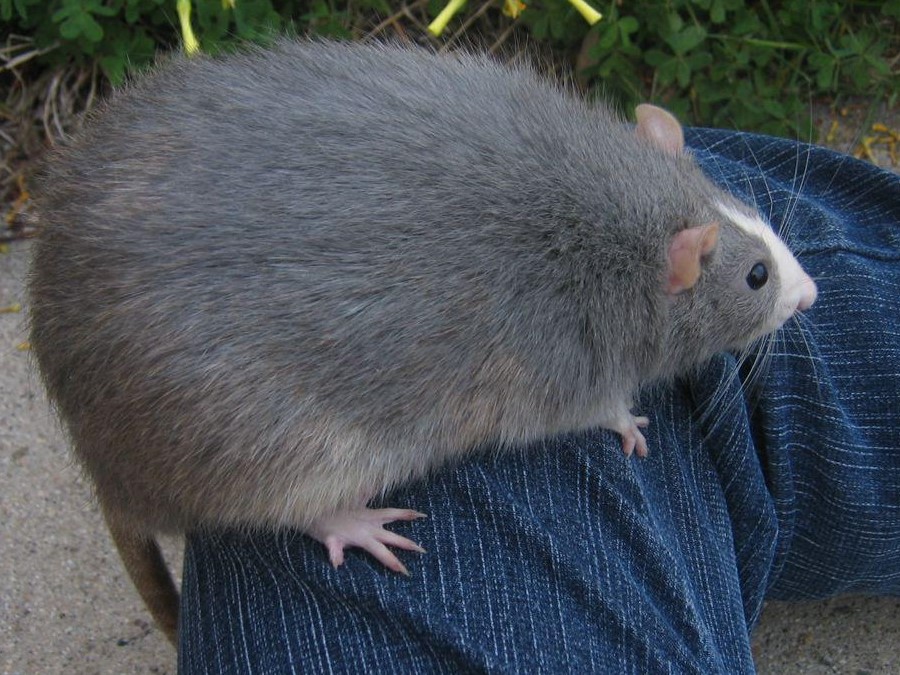
Welcome to our in-depth exploration of domesticated brown rats (Rattus norvegicus domestica), commonly known as pet rats. These fascinating creatures have a long history of cohabitation with humans and offer numerous opportunities for study and companionship.
Domesticated brown rats are descendants of wild brown rats, which originated in Asia. They became domesticated around 200 years ago primarily for laboratory research and later as popular pets. Their intelligence, adaptability, and sociability make them suitable candidates for domestication.
Domesticated brown rats typically have brown or gray fur, though they can exhibit a variety of colors and markings due to selective breeding. They have long, hairless tails, large ears, and sharp incisors that grow continuously throughout their lives, necessitating gnawing to keep them trimmed.
These rats are highly social animals that thrive in groups. They communicate through vocalizations, body language, and scent marking. Their complex social structure includes dominance hierarchies and cooperative behaviors such as grooming and sharing food.
Domesticated brown rats are adaptable creatures that can thrive in a variety of environments. They are opportunistic omnivores, consuming a diverse diet that includes grains, fruits, vegetables, insects, and small vertebrates. In captivity, they require spacious enclosures with bedding, hiding spots, toys, and opportunities for mental stimulation.
Female rats, called does, typically reach sexual maturity around 5 weeks of age, while males, called bucks, mature slightly later. Gestation lasts approximately 21-23 days, after which a litter of 6-12 pups is born. The newborns are initially hairless and blind but develop rapidly, opening their eyes at around 2 weeks of age.
Domesticated brown rats have been instrumental in scientific research across various fields, including psychology, neuroscience, medicine, and genetics. Their physiological and behavioral similarities to humans make them valuable models for studying complex biological processes and diseases.
As pets, domesticated brown rats require proper care and attention to thrive. They bond closely with their human caregivers and benefit from regular social interaction, enrichment activities, and a balanced diet. Routine veterinary care, including health check-ups and vaccinations, is essential for their well-being.
Studying domesticated brown rats offers valuable educational insights into animal behavior, biology, and research ethics. It fosters critical thinking skills and ethical awareness regarding the treatment of animals in scientific experimentation and pet ownership.
In conclusion, domesticated brown rats are remarkable creatures that have enriched both scientific understanding and human companionship for centuries. By studying and caring for these intelligent animals responsibly, we can gain invaluable knowledge and cultivate meaningful relationships.